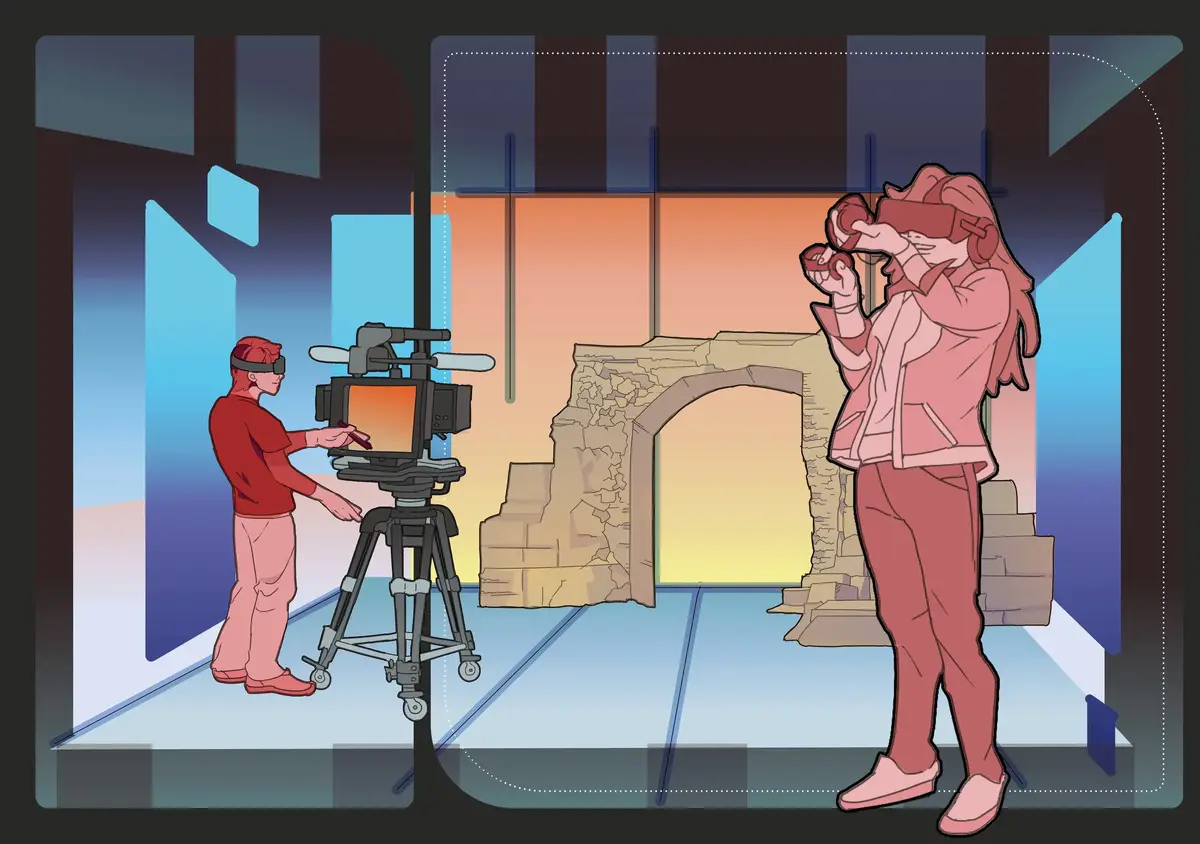
The goal of KIP 2026 is to explore how we can use innovation, visualization and digital technology in new ways to communicate and make cultural history accessible to audiences in a digital age. The event is a collaboration between Hamar Game Event, Anno museum and the Inland Norway University of Applied Sciences.
Thanks to support from Kulturfond Innlandet and Sparebankstiftelsen Hedmark, we can offer participation for only NOK 50 per participant. Registration is binding. Includes lunch on Saturday and Sunday. Allergies must be stated at registration. Separate registration is required for dinner on Saturday (pizza buffet or similar), paid on site (approx. NOK 250 per person). Student discount on food and drink at Mogens restaurant (does not apply to alcohol).
The results of the workshops will be displayed in the museum's exhibition area!
- 1/1
KIP banner 2026 Mildri Andrea Befring
Program
We offer five different workshops, with up to 10 spots per workshop. Each workshop runs through the weekend (you only sign up for one). See details further down the page. When registering, pick the workshop you would like to attend. First come, first served!
Friday 16 Oct: 1800-2100 (Key note speaker 1900h)
Saturday 17 Oct: 1000-1600. Optional: Social gathering and dinner 1700-2100
Sunday 18 Oct: 1000-1600
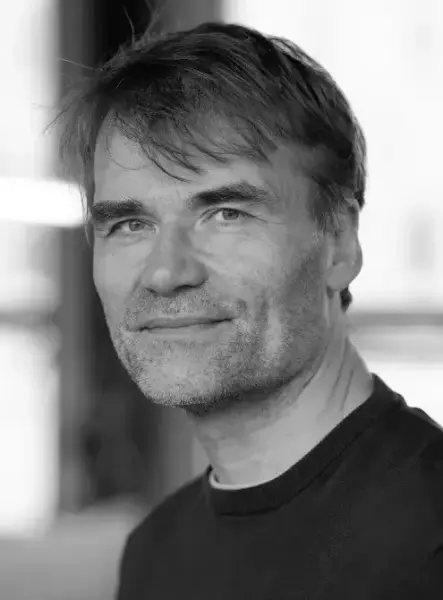
Title to be announced soon - but you can expect an engaging talk on top-class exhibition and communication technology, by Harold de Groot, founder and creative director of Shosho, one of Europe's leading technology companies in exhibition design.
Friday Oct 16
| 1800 h | Welcome. Registration. |
| 1900 h | Key note speaker |
| 2000-2100 h | Workshops starts |
Saturday Oct 17
| 1000-1600 | Workshops continues. Lunch included. |
| 1700-2100 | Optional: social gathering, dinner (at own cost), pub. |
Sunday Oct 18
| 1000-1400 | Workshops continues and terminates. Lunch included. |
| 1400-1600 | Presentations and closing. |
Workshop program
Select which workshop you would like to attend in the registration form. List your options in order of priority.
Jo Adrian Haavind
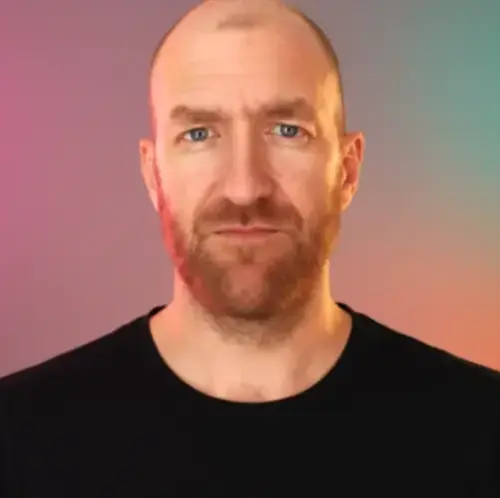
1. Development and Publishing of a VRChat World
Jo Adrian Haavind - Concept developer, producer, founder of InPresence AS / VR Vikings
The workshop uses real audience insights and authentic material to create an interactive, virtual audience experience in VRChat. Participants get to conceptualize and develop a prototype that is tested on the audience in VR.
What participants need: Laptop
Maximum 10 participants
Jason Kao Universitetet i Innlandet
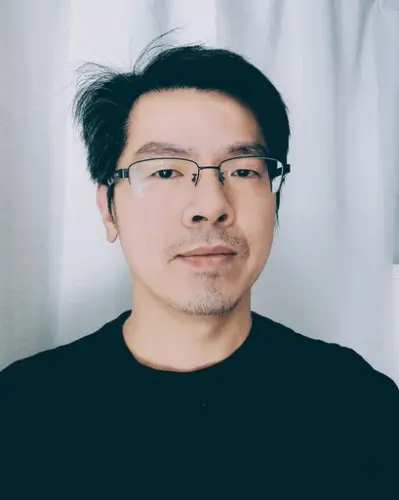
2. "Object Soul". Conversation with AI driven objects
Dr. Jason Kao, teacher and professor from the Game School at INN.
Description: An interactive AI and environmental storytelling workshop where participants explore the hidden material lives of everyday objects and imagine what those objects might say if they could speak.
Object Soul combines computer vision, artificial intelligence, creative writing, and generative art to encourage participants to reconsider their relationship with everyday objects and material consumption. Participants use a camera to scan an ordinary object, such as a pen, bottle, phone, toy, or piece of clothing. AI visually analyses the object and provides an estimated interpretation of its materials and environmental implications. The object is then given a fictional personality and speaks to the participant from its own perspective.
What participants need: Laptop.
Maximum 10 participants
Daniel Johansen HGE |
3. Capture the moment! Modern 3D Capture with Gaussian Splatting
Daniel Johansen, co-founder and board member of HGE, senior engineer from the Game School at INN
Turn your phone into a 3D capture tool! In this hands-on workshop, you’ll capture a real object, place or moment using nothing more than your phone. We’ll then transform your footage into a detailed 3D scene using Gaussian Splatting, and bring the result into a game engine or VR where you can step inside your own digital capture. Along the way, you’ll learn what Gaussian Splatting is, how it differs from traditional 3D scanning and photogrammetry, and how the technology can be used for cultural heritage, museums, virtual experiences, documentation and digital preservation.
What participants need:
1. A smartphone or camera for taking photos or video. Higher-quality cameras may produce better results.
2. A powerful laptop with an RTX graphics card.
Recommended, but not required. A limited number of suitable computers will be available to borrow during the workshop.
Maximum 10 participants
Mildri Andrea Befring HGE |
4. Transforming Photography Into 3D Renders with Projection Mapping in Blender
Mildri Andrea Befring, co-founder and vice chair of HGE, game developer and digital artist
Bring a photo to life!
Projection mapping is a technique used to create depth from a 2D image by projecting it onto a 3D surface. The technique is used in VFX, museum installations and digital art.
Participants will learn simple 3D modeling tools and projection, and using 3D shapes taken from a reference image given by the Anno museum. The guided process demonstrates how participants perform this in the 3D software Blender. The scene is lit and a render of the final result is taken.
What participants need: 1. A powerful laptop 2. Blender 5.2 (Which can be downloaded from free here:Download — Blender)
Maximum 10 participants
Henrik Goldsack HGE |
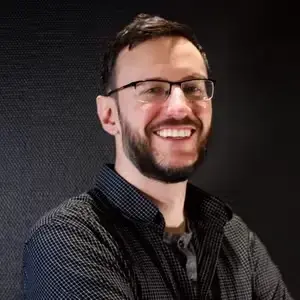
5. Meshroom to 3D Print
Henrik Goldsack, co-founder and board member of HGE, developer at Fynd Reality
From the screen and into your hands!
In this beginner's course you will learn the whole process, from photograph to finished 3D-printed object. We work through the steps from images to 3D model and on to the final print. This is an introduction to the possibilities of 3D printing. The workshop gives you a simplified insight into digitising collections, creating tactile accessibility for blind and partially sighted people, and making cultural heritage available to a global audience.
What participants need: A smartphone or camera for taking pictures. A decent laptop with an RTX graphics card (8 GB) is recommended but not required, as a limited number of suitable computers will be available on loan during the workshop.
Along the way we will be using free software such as AliceVision Meshroom, Meshmixer and PrusaSlicer.
Maximum 10 participants
Sign up here!
Everyone can sign up - first come, first served! Choose one workshop and click on link to sign up. 10 spots per workshop - if one is full, please choose another. Binding registration. The workshop runs through the entire weekend (please do not get confused of different dates mentioned in the registration form).
Deadline: Oct 9th.